Developing enhanced knowledge and systems-based thrips management to advance sustainable small fruit production
Project Objectives
Objective 1. Enhance knowledge by understanding thrips species complex, distribution, ecology and damage potential in small fruit systems
Objective Leads: Cato, Kennedy, & Walgenbach
Small fruit crops are routinely infested by thrips complexes comprised of multiple species that differ in their potential to cause damage and reduce yields/quality. The specific thrips species and their relative abundance within the complex vary among geographic regions, small fruit crops, and production systems, and change over time in response to factors including crop production practices, availability of alternative crop and non-crop hosts, weather, spread of invasive species, or range expansion of native species. Knowledge of the thrips species present in small fruit crops at the field, farm, and regional levels, the potential of each to impact crop yield/quality, and the factors that drive changes in the relative abundance of different species over time is a prerequisite to developing systems-based thrips management approaches. We will conduct a national survey of thrips species infesting small fruit crops at multiple times during the growing season to determine their temporal and spatial distribution and relative abundance in different crops and regions using taxonomic and molecular techniques to identify the species. For each species commonly found on each crop, we will determine its potential to cause damage. Because other crops and non-crop plants within production systems are the primary sources of thrips populations that disperse and infest small fruit crops, we will monitor thrips populations in the small fruit crops and surrounding crop and non-crop plants. We will also monitor thrips dispersal from these hosts to predict thrips infestation risks in small fruit crops. Because temperature is a primary driver of thrips development and population growth, and precipitation is a major factor suppressing their development, weather-driven models that predict thrips phenology and dispersal are important components of IPM programs. We will use thrips abundance and dispersal data we collect in conjunction with publicly available local, temperature and precipitation data to model thrips abundance and dispersal over time as a function of site-specific temperature and precipitation. These models will provide easy-to-use, objective tools for predicting location-specific timing of thrips risk to inform scouting activities and timing of thrips control measures.
Objective 2. Reduce reliance on insecticide sprays by developing innovative cultural and physical management strategies
Objective Leads: Leskey, Lahiri, & Rubio-Ames
Flower thrips and the invasive chilli thrips have been reported to cause economically significant yield losses and are impacting small fruit production in the Southeast, Upper Midwest and Western United States including California. To mitigate thrips damage and yield losses, growers typically make repeated applications of broad-spectrum insecticides with mixed success as resistance has been documented, and toxicity to pollinators and other beneficial arthropods compounds the damage and yield losses. To reduce reliance on insecticide applications, our team will explore cultural and physical control strategies. We will investigate use of reflective mulches to suppress thrips species and their impact on yield and fruit quality. Additionally, we will measure effects of pruning regimes on plant vigor and crop productivity and their impact on thrips and beneficial arthropods. We will also evaluate the efficacy of UV- C light applications against thrips species in lab, semi-field, and field studies. Finally, we will screen blueberry germplasm to identify potential host-plant resistance to chilli thrips and the flower thrips complex. We anticipate these efforts will provide small fruit growers with effective tools to reduce reliance on repeated insecticide applications for thrips management.
Objective 3. Improve sustainability by integrating biological and chemical management strategies
Objective Leads: Bilbo, Liburd, & Nottingham
Biological control is a sustainable approach to reduce pest outbreaks and improve system resilience to insect pests. Biocontrol has been shown to be a promising strategy for thrips control in several cropping systems, however, it often fails when natural enemies are killed by nonselective insecticide use for either thrips or other co-occurring pests. A successful integrated management program needs to identify the most effective natural enemies for each thrips species as well as compatible and effective insecticides for season long control. This project will conduct a series of lab, greenhouse, and field experiments across multiple small fruit growing regions. Initial lab and greenhouse studies will identify and compare the most promising predators, biopesticides, and selective chemical insecticides for relevant thrips species in each region and crop. This will include commercially available mite species, natural predators (identified in Obj. 1 surveys), entomopathogenic fungi and nematodes, insect growth regulators, and novel chemical modes of action. Field studies will validate on-farm efficacy of the most promising insecticides and biocontrol agents. Additional lab and field studies will evaluate compatibility of the most selective and effective insecticides with biocontrol agents to enhance their integration for the full pest complex in each crop. Thrips populations will also be screened for insecticide resistance to the most widely used insecticide classes.
Objective 4. Integrate IPM tactics into regional and crop-specific management programs
Objective Leads: Lopez, Isaacs, & Walton
The research team recognizes the need to harmonize the use of multiple IPM practices to manage thrips populations, reduce pest resurgence and insecticide resistance, and address other pests, such as spotted-wing drosophila and spider mites, as part of the diverse pest complexes in berry crop production systems while ensuring environmental health and conserving natural enemies and pollinators. Therefore, systems-based IPM strategies that address resistance management and minimize non-target impacts on natural enemies and pollinators are vital and can lead to high adoption rates. This objective will consist of field studies conducted in years 3-4 in all states involved with the project. Season-long IPM programs will be developed by integrating the best-performing regional and crop-specific thrips management techniques including cultural, physical, biological, and chemical tactics from Objectives 1-3 in years 1-2 and compared to grower standard practices using replicated field experiments. Variables including pest density, predator diversity, plant injury, and marketable yield will be analyzed to determine the effectiveness of each program. Findings will be synthesized to develop season-long IPM programs and data will be shared with economists for economic analysis in Objective 5.
Objective 5. Develop economics-based decision aid tools to increase profitability
Objective Leads: Brown, Fonsah, & Gomez
With the almost complete reliance on insecticides for thrips control in susceptible crops, quantifying the economic returns of calendar-based thrips management versus systems-based management strategies developed in this project will be critical for grower adoption or identifying hurdles to adoption. First, we will quantify the short- and long-term profit implications of conventional control in different regions and crops. To do this, the economic assessment of thrips control strategies needs to consider production costs, the dynamics of the production system, pest populations (including secondary pests), and pesticide resistance. We will work closely with team members to select 6-8 areas of focus to develop thrips economic assessments of prevailing conventional control strategies based on sprays. Each area of focus will be defined specifically for:
- crop,
- region,
- production system,
- market channel, and
- thrips management issue of interest.
For each area of focus, we will collect detailed data to
- develop partial crop budgets to establish baseline profit figures (i.e., profits for a farm free of thrips infestation);
- estimate the costs and benefits of both conventional and alternative systems-based control strategies (including thrips monitoring strategies), and
- assess economic losses due to thrips.
Second, we will use these cost estimates to construct excel-based decision-aid support tools tailored toward specific crop, region, and production characteristics. The tools will capture and clearly convey the expected economic performance and key uncertainties of IPM across these contexts. Growers will be able to input their specific production practices and market parameters to anticipate profit from the systems-based management programs.
Objective 6. Promote adoption of systems-based thrips management programs by disseminating actionable recommendations to the end-users and evaluate their impact
Objective Leads: LaForest, Sial, & Walker
Most of our team members have significant Extension appointments. Our research findings will be synthesized into region- and crop-specific actionable recommendations to be incorporated into season-long thrips management programs and presented at the SAB meeting to be vetted by the stakeholders and researchers. Once vetted, the trial results and actionable recommendations will be widely disseminated by all team members to end-users via presentations at research & Extension meetings, publications in scientific journals, Extension bulletins, project webinars, on-farm demonstrations and field days at commercial farms in collaboration with key growers, online through our project website (www.stopthrips.org), and social media. Additionally, we will develop short-form video with grower collaborators to demonstrate online decision-aid tools developed in Objective 5 to maximize the adoption of actionable recommendations. The Impact Evaluation Specialist will utilize quantitative and qualitative data collection methods through a diverse combination of evaluation instruments including pre- and post-project stakeholder surveys and grower case-studies to determine grower adoption and to evaluate the impact.
Project Team
Director

Project Director: Dr. Ashfaq A. Sial
Professor, Department of Entomology, University of Georgia, 463D Biological Sciences Building, Athens, GA 30602.
E-mail: ashsial@uga.edu

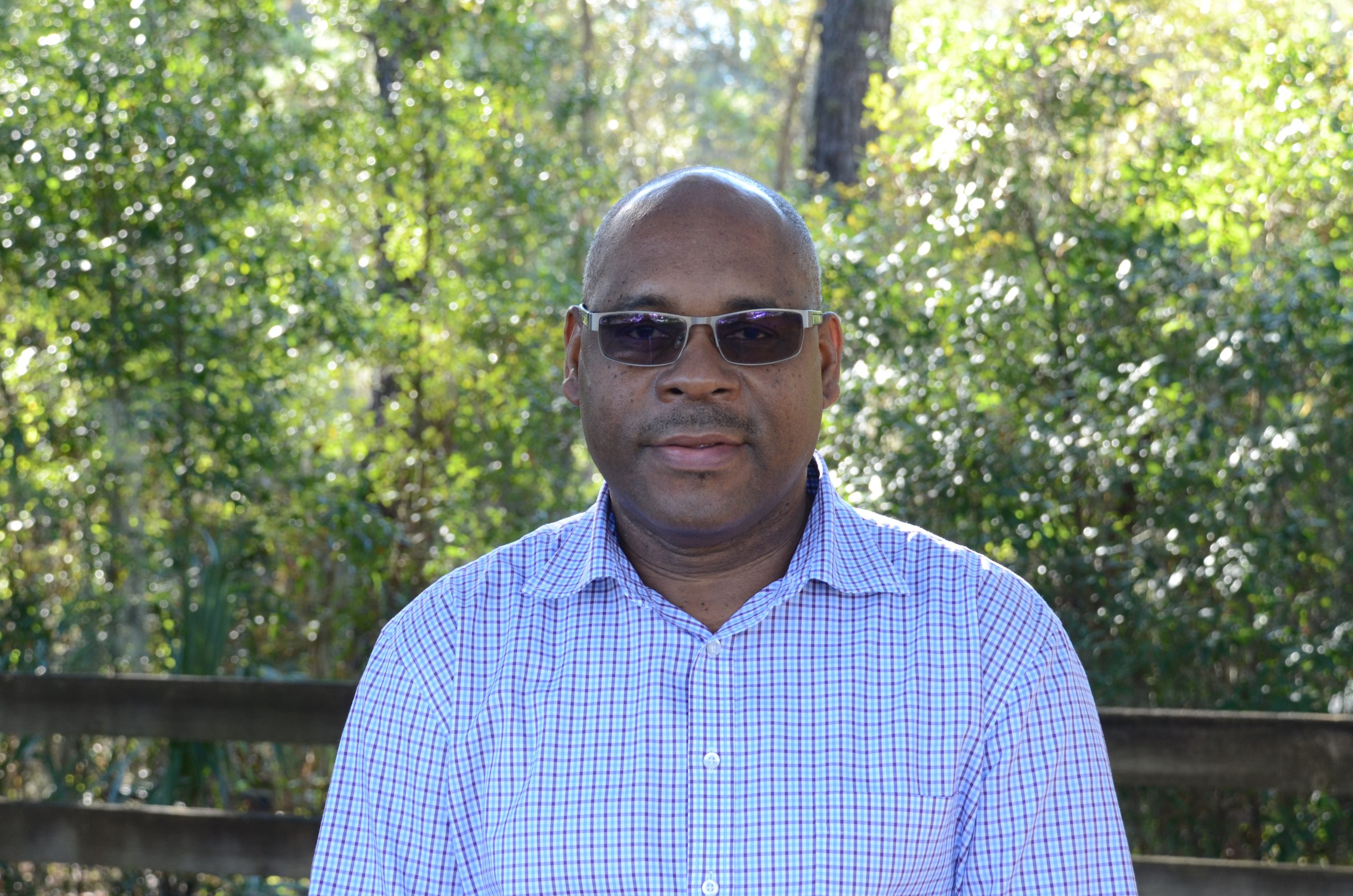

Dr. Tracy Leskey
Director/Research Leader – Entomology, Appalachian Fruit Research Station, USDA Agricultural Research Service, 2217 Wiltshire Rd, Kearneysville, WV 25430-2771.
Email: Tracy.Leskey@ usda.gov
Dr. Oscar Liburd
Professor (Small Fruit and Vegetable Entomologist), Department of Entomology and Nematology, University of Florida, 970 Natural Area Drive, Gainesville, FL 32611.
Email: oeliburd@ufl.edu
Dr. James Walgenbach
William Neal Reynolds Distinguished Professor, Applied Insect Ecology and Pest Management, North Carolina State University, 455 Research Drive Mills River, NC 28732.
Email: jwalgenb@ncsu.edu
Co-Project Investigators
Tom Bilbo
Zachary Brown
Aaron Cato
Juliet Chu
Alejandro Del-Pozo
Greg Fonsah
Miguel Gomez
Rufus Isaacs
George Kennedy
Sriyanka Lahiri
Joe LaForest
Louie Nottingham
Cesar Rodriguez-Saona
Zilfina Rubio-Ames
Rajagopalbabu Srinivasan
Tegan Walker
Vaughn Walton
Frank Zalom
Dr. Tom Bilbo, Assistant Professor (Vegetable and Strawberry Entomology), Department of Plant & Environmental Sciences, Clemson University, Charleston, SC 29414. Email: tbilbo@clemson.edu
Dr. Zachary Brown, Assistant Professor, Department of Agricultural and Resource Economics, North Carolina State University, 2801 Founders Drive, Raleigh, NC 27695. Email: zsbrown2@ncsu.edu
Dr. Aaron Joseph Cato, Assistant Professor (Extension Specialist Horticulture IPM) Department of Horticulture, University of Arkansas, 2301 South University Ave., Little Rock, AR 72204. E-mail: acato@uada.edu
Dr. Ye (Juliet) Chu, Assistant Professor (Blueberry Breeding), Department of Horticulture and Institute of Plant Breeding, Genetics, and Genomics, Univeristy of Georgia, 2356 Rainwater Road, Tifton, GA 31793. Email: ychu@uga.edu
Dr. Alejandro Del-Pozo, Assistant Professor and Extension Specialist, Department of Entomology, Virginia Polytechnic Institute and State University, Hampton Roads Agricultural Research and Extension Center, 1444 Diamond Springs Rd., Virginia Beach, VA 23455. Email: adelpozo@vt.edu
Dr. Miguel Gomez, Robert G. Tobin Professor of Food Marketing, SC Johnson College of Business, Cornell University, 475A Warren Hall, Ithaca, NY 14853-6201. Email: mig7@cornell.edu
Dr. Rufus Isaacs, Distinguished Professor and Blueberry Entomology Extension Specialist, Department of Entomology, Michigan State University, 578 Wilson Rd., East Lansing, MI 48824. Email: isaacsr@msu.edu
Dr. George Kennedy, William Neal Reynolds Distinguished Professor of Agriculture, Department of Entomology and Plant Pathology, NC State University, Raleigh, NC 27695. Email: gkennedy@ncsu.edu
Mr. Joseph LaForest, Public Service Associate, University of Georgia Center for Invasive Species & Ecosystem Health, Tifton, 2360 Rainwater Road, Tifton, GA 31793. Email: laforest@uga.edu.
Dr. Sriyanka Lahiri, Assistant Professor (Strawberry and Small Fruit Crop Entomologist), University of Florida, Gulf Coast Research and Education Center, 14625 CR 672, Wimauma, FL 33598. E-mail: lahiris@ufl.edu
Dr. Lorena Lopez, Assistant Extension Professor (Small Fruit IPM), Department of Entomology and Plant Pathology, North Carolina State University, 100 Derieux Place (Gardner Hall)
NC State University, Raleigh, NC 27695. Email: llopezq@ncsu.edu
Dr. Louie Nottingham, Assistant Professor, Department of Entomology, University of Florida, 16650 State Route 536, Mount Vernon, WA 98273. Email: louis.nottingham@wsu.edu
Dr. Douglas G. Pfeiffer, Professor (Fruit Entomologist), Department of Entomology, 205C Price Hall, Virginia Tech, Blacksburg, VA 24601. Email: dgpfeiff@vt.edu
Dr. Cesar Rodriguez-Saona, Extension Specialist in Entomology, PE Marucci Center for Blueberry and Cranberry Research and Extension, Rutgers, The State University of New Jersey, 96 Lipman Drive, New Brunswick, NJ 08901-8525. Email: crodriguez@njaes.rutgers.edu
Dr. Zilfina Ames Rubio, Assistant Professor (Small Fruit Horticulturist), Department of Horticulture, University of Georgia, 2360 Rainwater Road, Tifton, GA 31793. Email: Zilfina.RubioAmes@uga.edu
Dr. Rajagopalbabu Srinivasan, Professor, Department of Entomology, University of Georgia, 1109 Experiment St, Entomology Dept, Griffin, GA 30223. Email: babusri@uga.edu.
Dr. Tegan Walker, Evaluation Specialist, Southern IPM Center, NC State University, 455 Research Drive Mills River, NC 28732. Email: twalker6@ncsu.edu
Dr. Vaughn Walton, Associate Professor, Department of Horticulture, Oregon State University, 2750 SW Campus Way, Corvallis, OR 97331. Email: vaughn.walton@oregonstate.edu
Dr. Hehe Wang, Assistant Professor of Plant Bacteriology, Plant and Environmental Sciences Department, Edisto Research and Education Center, Clemson University, 64 Research Rd., Blackville, SC 29817. Email: hehew@clemson.edu
Dr. Vance Whitaker, Professor of Horticulture, Gulf Coast Research and Education Center, Univeristy of Flordia, 14625 County Road 672, Wimauma, FL 33598. Email: vwhitaker@ufl.edu
Dr. Frank Zalom, Distinguished Professor Emeritus, Department of Entomology & Nematology, UC Davis, 367 Briggs Hall, One Shields Avenue, Davis, CA 95616. Email: fgzalom@ucdavis.edu
Collaborators
Dr. Daniel Hasegawa, Research Entomologist, Crop Improvement and Protection Research, USDA Agriculture Research Service, 1636 E. Alisal St, Salinas, CA, 93905. Email: daniel.hasegawa@usda.gov
Dr. Tami Collum, Research Plant Pathologist, Appalachian Fruit Research Station, USDA Agricultural Research Service, 2217 Wiltshire Rd, Kearneysville, WV 25430-2771. Email: tami.collum@usda.gov
Dr. Cheryle A. O’Donnell, Contractor, National Specialist, USDA APHIS PPQ PEIP National Identification Services (Retired), USDA Beltsville-Systematic Entomology Laboratory, 10300 Baltimore Avenue, Beltsville, MD, 20705. Email: Cheryle.a.odonnell@usda.gov
Dr. Amy Tabb, Research Agricultural Engineer, Appalachian Fruit Research Station, USDA Agricultural Research Service, 2217 Wiltshire Rd, Kearneysville, WV 25430-2771. Email: tami.collum@usda.gov
Stakeholder Advisory Board
- Matt Reichenbach, FL — Florida Strawberry Growers Association
- Doug Phillips, FL — UF Blueberry Extension Coordinator
- Kenneth Parker, FL — FL Strawberry Growers Association
- Brandon Wade, GA — Georgia Berry Exchange
- Michael Thomas, GA — Thomas Farms, Blackshear, GA
- Ben Cantrell, GA — MBG Marketing, Southeastern United States
- Zack Williams, GA — UGA Extension Agent
- Philip Rollins, SC — Cooperative Extension Clemson University
- Sam Hall, SC — Bush-N-Vine Farm
- Matt Wilson, AR — Ritter Farms
- Roy Flanagan, VA — Virginia Cooperative Extension, Virginia Beach
- Gary Pavlis, NJ — Cooperative Extension of Atlantic County
- Karen Bleadow, NC — North Carolina Cooperative Extension, Henderson County
- Jeff Crotts, NC — Knobb Creek Farms
- Hillary Thomas, CA — Naturipe Berry Growers
- Adam Stager, CA — TRIC Robotics
- Byan Ostlund, OR — OR Blueberry Commission
- Carlos Garcia Salazar, MI — Michigan State University Extension
- Keven Berendsen, WA — Crop Advisor, Enfield Fruit Farms, WA
- Greg Loeb, NY — Cornell University